When I ran for Congress, I made a promise to our nation's veterans that I would fight for those who fought for us. I pledged to ensure that the men and women who wore our nation's uniform receive the benefits, medical care, and respect they have earned through their service.
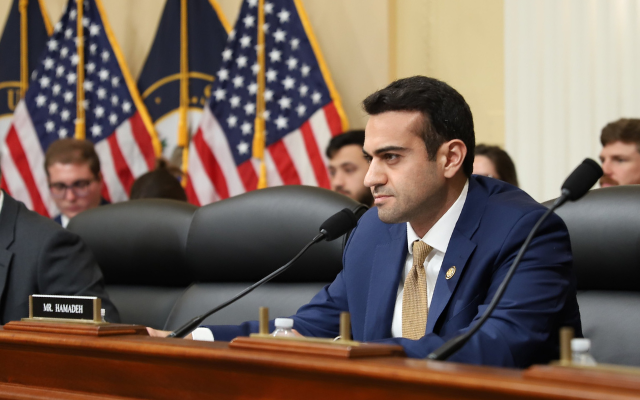
As a member of the House Committee on Veterans' Affairs, I have worked with colleagues on both sides of the aisle to demand greater accountability, improve access to care, and hold the Department of Veterans Affairs (VA) to the highest standards.
I have also made veterans' constituent services a priority in my congressional office, dedicating significant resources to hiring experienced caseworkers who can help veterans and their families cut through federal red tape, resolve benefit disputes, and obtain the assistance they deserve.
Today, I am pleased to report that we are making substantial progress in how our nation serves its veterans.
More veterans receiving care:
As of October, more than 300,000 additional veterans had enrolled in VA health care during 2026, while 43 new VA health care clinics have opened nationwide since January 2025.
A dramatic reduction in the benefits backlog:
The number of veterans waiting on backlogged VA disability claims has fallen by more than 70 percent since January 20, 2025, reversing a backlog that grew by 24 percent during the previous administration.
Faster disability decisions:
Average processing times for disability claims have dropped 46 percent since January 2025, helping veterans receive decisions on their earned benefits sooner.
Record access to medical appointments:
During Fiscal Year 2025, the VA delivered more than 82 million direct-care appointments, a 4.1 percent increase over the previous year. Community care appointments approached 60 million, an increase of 12 percent.
Historic investments in medical facilities:
The VA approved nearly $5 billion in Fiscal Year 2026 to repair, upgrade, and modernize its health care infrastructure, representing the largest non-recurring maintenance investment in the department's history.
More convenient medical care:
Since January 2025, the VA has made more than 3.4 million appointments available during extended hours, including mornings, evenings, and weekends, giving veterans greater flexibility to receive treatment.
Helping homeless veterans rebuild their lives:
During Fiscal Year 2025, the VA helped 51,936 homeless veterans obtain permanent housing, its strongest annual performance in seven years.
Veterans are receiving medical attention sooner, families gaining greater financial security, and former service members finding stability after experiencing homelessness.
For veterans in Arizona's Eighth Congressional District, where military service is a proud part of our communities, these improvements are particularly important. Our veterans should never have to spend months battling a federal bureaucracy to receive benefits they earned through years of sacrifice.
There is still more work to do.
One of my continuing priorities is ensuring that veterans have access to quality medical care, whether that treatment is provided at a VA facility or through a qualified community provider.
That is why, in July, Congressman Paul Gosar and I called on VA Secretary Doug Collins to address serious problems identified by the VA Office of Inspector General in its audit of the Veterans Community Care Program.
The program is intended to give eligible veterans access to medical services outside the VA system when certain conditions are met. For veterans who live far from VA facilities, face lengthy appointment delays, or require specialized treatment, community care can be an essential lifeline.
Unfortunately, the Inspector General uncovered troubling weaknesses in how eligibility decisions were being made and documented.
According to the audit, nearly one-quarter of veterans referred for community care did not satisfy the applicable eligibility requirements. Investigators also identified millions of cases in which the VA lacked adequate records demonstrating that veterans had been evaluated for community care or had chosen not to pursue that option.
The Inspector General estimated that flawed eligibility determinations resulted in more than $440 million in unnecessary expenditures during just the first quarter of Fiscal Year 2025. If those problems persist, the annual cost could approach $1.7 billion. That is money that should be available to strengthen veterans' medical services, reduce delays, improve facilities, and ensure that care reaches those who need it most.
Congressman Gosar and I urged Secretary Collins and VA leadership to act on the Inspector General's recommendations, strengthen oversight, correct administrative failures, and work with Congress to prevent these problems from continuing.
I am confident that Secretary Collins and the Trump administration recognize the importance of these reforms and I will continue to fight for congressional oversight and measurable results.
The American people expect accountability from their government, and our veterans deserve nothing less.
I am proud of the progress being made to improve VA services, but there are still veterans waiting for medical appointments, struggling with disability claims, or navigating a complicated system that too often places paperwork ahead of people.
I will continue working across party lines when it benefits our veterans, challenging the VA when it falls short, and using every resource available to my congressional office to help those who have served.
Our veterans fulfilled their duty to America. It is our responsibility to fulfill America's duty to them.
That was my promise when I ran for Congress, and it remains one of my highest priorities today.